Junk Font: A Unique Display Font That Elevates Creative Projects
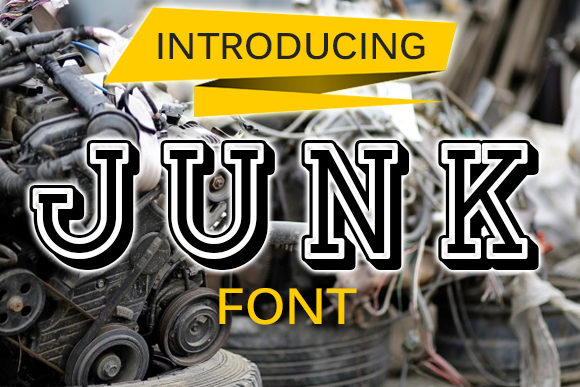
Junk is an incredibly unique display font that stands out in a world filled with conventional typography choices. Designed with creativity and versatility in mind, Junk has the potential to transform your creative projects by adding a bold, eye-catching element that grabs attention. Whether you're designing a poster, creating a logo, or working on digital content, Junk can be the perfect tool to help you achieve a striking visual impact.
What makes Junk truly special is its ability to convey energy and personality through its distinctive letterforms. Unlike traditional fonts that aim for uniformity, Junk embraces irregularity and asymmetry, giving it a raw, edgy feel that's both modern and memorable. This makes it ideal for designers looking to make a statement without relying on clichéd typefaces.
Understanding the Challenges of Choosing the Right Font
Selecting the right font for a project can be a daunting task. Designers often face challenges such as finding a font that aligns with their brand identity, meets readability standards, and stands out in a crowded market. Many times, the wrong font choice can lead to a lackluster design that fails to capture the intended message or emotion.
Additionally, there's the challenge of ensuring that the chosen font works well across different media—whether it's print, web, or mobile. Fonts that look great on a computer screen may not render properly on a mobile device, which can affect the overall user experience.
For those who want to push creative boundaries, the need for a font that feels original and expressive is even more critical. In this context, Junk emerges as a compelling solution, offering a fresh perspective that can elevate any design project.
How Junk Addresses These Challenges
Junk addresses these challenges by providing a font that is both versatile and expressive. Its unique structure allows it to work well in various contexts, from headlines to logos, while still maintaining a sense of cohesion and style. The font's irregular shapes and dynamic lines give it a sense of movement and energy that can be used to highlight key messages or draw attention to specific elements within a design.
One of the main benefits of using Junk is its ability to stand out without being overwhelming. It's designed in a way that ensures legibility, even when used for larger text sizes. This makes it suitable for use in a wide range of applications, including signage, packaging, and digital banners.
Moreover, Junk is highly adaptable. It can be paired with other fonts to create a balanced and visually appealing layout. For instance, pairing Junk with a clean sans-serif font can provide contrast and enhance readability while still maintaining a cohesive design aesthetic.
Practical Applications of Junk in Design
The versatility of Junk makes it a valuable asset for designers across various industries. In branding, Junk can be used to create a strong visual identity that reflects the brand's personality. Its edgy and unconventional style is particularly well-suited for brands that want to convey a sense of innovation, rebellion, or artistic flair.
In web design, Junk can be used to create eye-catching headlines, call-to-action buttons, and navigation menus. Its unique character helps to break up the monotony of standard fonts, making the website more engaging and visually interesting.
For print media, Junk is an excellent choice for headlines, titles, and promotional materials. Its bold and dynamic appearance ensures that it captures attention and leaves a lasting impression on the viewer.
When it comes to graphic design, Junk offers endless possibilities. It can be used to create posters, flyers, and advertisements that stand out from the competition. Its distinctive style can also be incorporated into illustrations, infographics, and other visual elements to add depth and interest.
Considerations for Using Junk Effectively
While Junk is a powerful tool, it's important to use it thoughtfully. Because of its unconventional nature, it may not be suitable for every design project. It's best used in situations where a bold, attention-grabbing font is needed, rather than in contexts that require a more formal or professional tone.
Another consideration is the font size and spacing. Since Junk has a unique structure, it's important to ensure that the text remains readable, especially at smaller sizes. Proper line spacing and letter spacing can help to maintain clarity and prevent the text from appearing cluttered.
Designers should also consider the color palette when using Junk. The font's distinctiveness can be enhanced by pairing it with complementary colors that highlight its features. For example, using high-contrast colors can make the text more prominent and visually striking.
Finally, it's important to test Junk in different environments to ensure that it renders correctly across various platforms and devices. This includes checking how it appears on different screen resolutions, browsers, and operating systems to ensure a consistent user experience.
Different Approaches to Using Junk
Depending on the designer's goals and the project's requirements, Junk can be approached in different ways. Some designers may choose to use it as a primary font for all text, while others may use it sparingly as an accent to add visual interest.
For example, a designer working on a music festival poster might use Junk as the main font for the event name, while pairing it with a simpler font for the supporting details. This approach creates a balance between boldness and readability, ensuring that the poster is both visually engaging and easy to read.
On the other hand, a designer creating a website for a tech startup might use Junk for headlines and call-to-action buttons, while using a more minimalistic font for body text. This combination helps to create a modern and dynamic look that aligns with the brand's innovative spirit.
No matter how it's used, Junk offers a unique opportunity to bring creativity and personality to any design project. By understanding its strengths and limitations, designers can harness its power to create designs that are both impactful and effective.
Ultimately, Junk is more than just a font—it's a creative tool that can help designers push the boundaries of what's possible. With its bold, expressive style and versatile applications, Junk has the potential to become a favorite among designers looking to make a lasting impression with their work.